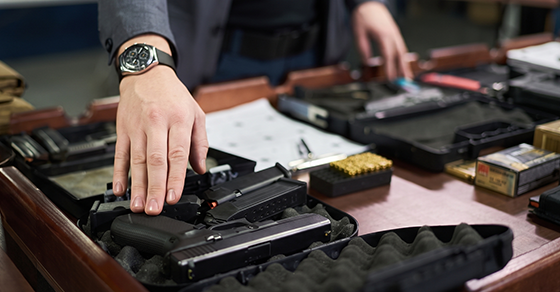
Safely storing and transporting a firearm is more than a practical precaution. It’s a legal responsibility shaped by the firearm’s classification, whether it is loaded, the security measures in place, and the circumstances surrounding its storage or movement.
An oversight involving ammunition, a locking device, a vehicle, or transportation documentation may attract police scrutiny and lead to criminal allegations. This article explains the general rules for non-restricted, restricted, and prohibited firearms, but it can’t replace legal advice about a specific situation.
Improper storage or transportation can potentially engage section 86 of the Criminal Code. Section 86(1) addresses careless use, handling, storage or transportation, or a failure to take reasonable precautions for the safety of others. Section 86(2) separately addresses contraventions of prescribed firearms storage, handling and transportation regulations. Whether an arrangement amounts to a criminal offence depends on the precise facts and the provision alleged.
Canadian firearm storage laws impose different requirements depending on the firearm’s classification and whether it is being stored, displayed, handled, or transported. The federal Storage, Display, Transportation and Handling of Firearms by Individuals Regulations address each category separately.
Compliance involves the full arrangement, not simply owning a lock or case. Loaded status, ammunition access, the container, vehicle security, and any required authorization may all matter.
The rules differ for non-restricted, restricted, and prohibited firearms. A firearm’s appearance, intended use, or age doesn’t provide a reliable legal classification.
Owners should verify the firearm’s current status through reliable official information. The RCMP’s Firearms Reference Table (FRT) is an important administrative reference, but the RCMP itself describes the FRT as an administrative tool rather than a legal instrument. The Criminal Code and applicable classification regulations remain the governing legal authorities. Legal advice may be necessary when classification, registration, or possession status is uncertain.
In June 2026, the federal government extended the amnesty orders relating to firearms prohibited in 2020, 2024, and 2025. The orders are set to expire 90 days after the Supreme Court of Canada renders its decision in the pending challenge to the May 2020 prohibition. The amnesty protects specified persons from criminal liability only within its terms; it does not itself reclassify the affected firearms or authorize use, transport, or other conduct outside those terms.
A non-restricted firearm must generally be unloaded and either rendered inoperable with a secure locking device, have its bolt or bolt carrier removed, or be kept in an appropriately constructed locked container, receptacle, or room. Ammunition cannot be readily accessible unless it is kept in a qualifying locked area or container. Narrow exceptions exist, but their conditions should be confirmed before anyone relies on them.
Before leaving the storage area, confirm:
Restricted firearms face stricter requirements. Unless they are kept in a vault, safe, or room specifically constructed or modified for secure storage, they must generally be unloaded, rendered inoperable with a secure locking device, and placed in a securely locked container, receptacle, or room that cannot readily be broken open.
A locked exterior door, ordinary cabinet, or trigger lock alone won’t necessarily satisfy the complete requirements. Product advertising also doesn’t determine whether a device or container meets the regulatory standard.
Lawful possession of prohibited firearms is limited, and their storage rules must be considered separately. Depending on the arrangement, the firearm must generally be unloaded, secured with a locking device and robust locked storage, or kept in a specially constructed vault, safe, or room.
A prohibited automatic firearm with a readily removable bolt or bolt carrier may require that component to be removed and secured in another locked room. Grandfathering, licensing, registration, transportation authorization, and storage compliance remain separate legal questions.
A locked firearm does not end the compliance analysis. Compatible ammunition may be stored with or separately from the firearm when the applicable locked-container or secure-room requirements are met.
The analysis is not limited to whether a lock is physically present. Depending on the facts, the location of compatible ammunition and whether the storage is genuinely secured and controlled may also matter. Access by children, visitors, roommates, and other people who are not lawfully entitled to possess the firearm should be carefully controlled.
Non-restricted firearms generally must be unloaded during transportation. Unlike the storage rules, the federal transportation rule does not generally require a non-restricted firearm to be trigger-locked or placed in a locked case simply because it is being transported. If the vehicle is unattended, however, additional requirements apply: where there is a lockable trunk or similar compartment, the firearm must be placed inside and that compartment securely locked; without one, the firearm must not be visible from outside and the vehicle or relevant compartment must be securely locked. Other laws, licence conditions, and circumstances may also matter.
Before departure, check the firearm’s unloaded status, placement, visibility, ammunition, vehicle locks, and intended destination.
Restricted firearms must generally be unloaded, rendered inoperable with a secure locking device, and placed in a locked opaque container that cannot readily be broken into or accidentally opened. Prohibited firearms generally follow similar transportation requirements, with an added bolt or bolt-carrier rule for certain automatic firearms.
An Authorization to Transport may also be required for restricted or prohibited firearms. Section 19 of the Firearms Act governs authorized transportation between specified places for good and sufficient reasons and includes some automatic authorizations in defined circumstances. The applicable permission depends on the firearm, destination, purpose, licence conditions, and other circumstances, so a licence or previous authorization should not be assumed to permit every journey.
A compliant transportation case must do more than cover the firearm. For restricted and prohibited firearms, the regulations refer to a locked opaque container constructed so it cannot readily be broken open or accidentally opened.
| Item | General role | Important limitation |
|---|---|---|
| Storage container | Secures a firearm at its storage location | Must satisfy the rule applicable to that firearm’s classification |
| Transportation case | Required for restricted/prohibited firearms and often used for others | Does not replace unloading or secure-locking-device requirements where those apply |
| Vehicle trunk | Secures a firearm or required container in an unattended vehicle | Must be securely locked where the regulation requires use of a trunk or comparable compartment |
| Ordinary unlocked case | May protect a firearm from damage | Not a substitute where a locked opaque container is required |
Locks, hinges, closures, and access to keys or combinations should be checked before travel.
Fuel stops, meals, repairs, and overnight accommodation may create unattended-vehicle issues. Under the federal regulations, a vehicle is “unattended” when it is not under the direct and immediate supervision of a person who is at least 18 years old or who holds a firearms licence. A short absence can therefore engage the unattended-vehicle requirements.
Plan stops in advance, keep the firearm out of sight where required, and use the locked trunk or comparable compartment when the regulations require it. For restricted and prohibited firearms, confirm that the proposed trip is authorized and complies with any applicable Authorization to Transport or licence conditions. Do not assume that an authorization covering one purpose or destination permits every journey.
Required documents may depend on classification, registration, licence conditions, destination, and transportation authorization. Confirm that licences, registration certificates, and any authorizations are valid and correspond to the firearm and trip. Under section 117.03 of the Criminal Code, police may in some circumstances seize a firearm when the person in possession cannot produce the required authorization on demand; the section also provides a 14-day process for claiming the seized item and producing the required documentation for its return.
Do not assume that outdated paperwork or documents relating to another person will establish lawful possession or transport. If police question the documentation, preserve what was presented and obtain legal advice before providing speculative explanations about licensing, registration, or authorization status.
A person may load a firearm or handle a loaded firearm only where it can lawfully be discharged under applicable federal, provincial, and municipal rules.
Do not assume that being on private property makes loading lawful. The question is whether the firearm may lawfully be discharged at that location under all applicable federal, provincial, and municipal law. Keep the firearm secured until the destination and legal conditions for handling it have been reached.
Recurring issues include loaded storage, an inadequate locking device, accessible ammunition, an unsuitable container, or a firearm left visible in an unattended vehicle where the regulations require it to be concealed or secured elsewhere. Storage arrangements may come to police attention during traffic stops, domestic calls, wellness checks, theft reports, or unrelated investigations.
A valid firearms licence does not excuse non-compliance with the storage and transportation rules. Section 86 of the Criminal Code distinguishes careless conduct or a failure to take reasonable precautions from a contravention of prescribed firearms regulations. A first offence may proceed by indictment or summary conviction, but an allegation does not establish guilt. The exact regulation alleged, the physical storage arrangement, lawful excuses where available, police conduct, and the surrounding evidence require individual assessment.
Don’t provide detailed explanations, guesses, or consent to further searches before understanding your rights and obtaining legal advice. Preserve your licence, registration documents, authorizations, photographs, storage-device records, vehicle information, and relevant communications.
I examine classification, possession, knowledge, storage conditions, the transportation purpose, police search powers, seizure procedures, and continuity of evidence. I defend clients facing allegations involving improper firearm storage or transportation and review the technical evidence and police conduct against the specific offence and regulations alleged.
When I defend a storage or transportation allegation, I begin with the physical evidence and the precise rule the Crown says was breached. I look at where the firearm was found, whether it was loaded, how it was classified, what locking device or container was used, where compatible ammunition was located, and who actually controlled the premises or vehicle.
I also review photographs, body-worn camera or other police video where available, officer observations, licence and registration records, any Authorization to Transport, statements made to police, and the continuity and handling of the firearm after seizure. Where the firearm was discovered during a police search, I examine whether police had lawful authority to enter, search, and seize the firearm.
Following firearm storage laws begins with correct classification, unloaded storage, suitable locks and containers, secure ammunition practices, and careful travel planning. Because Canada’s firearms regulations are technically detailed, the correct response depends on the firearm, documents, location, and surrounding circumstances.
I defend clients facing firearms and weapons offences, including allegations involving storage, transportation, possession, licensing, and related issues. Where a firearm was located during a police search, I also review the legal basis for the search and seizure and whether the evidence establishes the alleged regulatory breach.
If you have been charged with a firearm offence in Ontario, you can call me at 613-565-3363, email omar@aehcl.ca, or contact me online.
They may be stored together when the applicable locked-container, vault, safe, or secure-room requirements are met. The answer depends on the firearm’s classification and the exact storage arrangement.
Ammunition left readily accessible outside the secure area may create legal concerns. Check the rules that apply to the specific firearm and storage arrangement rather than relying on a single rule for every firearm class.
Not in every case. A secure locking device may be one part of a compliant arrangement, but restricted and prohibited firearms may also require an appropriate locked container, receptacle, vault, safe, or secure room.
The full arrangement should be reviewed, including whether the firearm is unloaded, how ammunition is secured, and who can access the room or container.
Leaving a firearm in an unattended vehicle engages specific requirements involving the vehicle’s trunk or comparable compartment, external visibility, and vehicle security. Restricted and prohibited firearms must also remain in their required locked opaque containers.
The unattended-vehicle provisions should not be read as a blanket rule permitting a vehicle to be used as long-term firearm storage. Whether an overnight stop remains part of transportation or raises separate storage issues may depend on the circumstances. It should be planned carefully, particularly when an Authorization to Transport is involved.
Police may investigate the firearm’s condition, location, accessibility, classification, licensing, registration, ammunition, and who possessed or controlled it. Possible allegations may include careless storage or contravention of federal storage regulations.
A charge doesn’t determine guilt. Search legality, possession, knowledge, lawful excuse, regulatory compliance, and the surrounding evidence may all require review. Avoid speculative statements and obtain legal advice promptly.
The principal requirements discussed here arise under federal law. Provincial rules, municipal bylaws, hunting laws, discharge restrictions, licence conditions, and transportation authorizations may also affect a particular trip or storage arrangement.
Check the requirements for the location, destination, firearm, and purpose. General online information can’t replace case-specific legal advice.


© 2026 Criminal Defence Lawyer - www.aehcl.ca. All Rights Reserved.